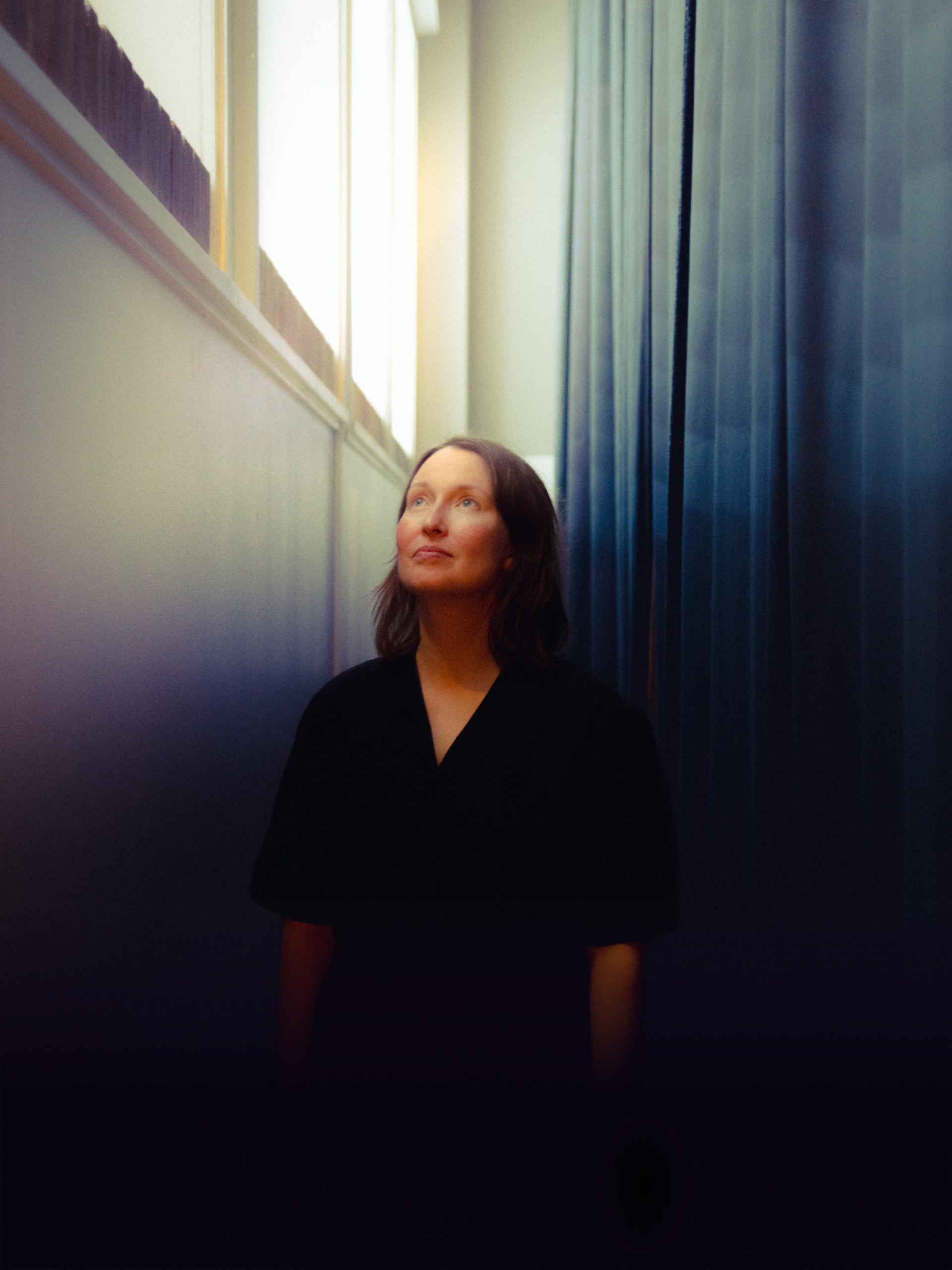
2026 ARTIST INTERVIEW • Artist Sonja Jokiniemi is no stranger to grief. It was her father’s passing that first set aflame her calling to work both through and with grief, and to investigate Karelian cultural heritage and the fading folk traditions that now anchor her new performance trilogy. Arvo, its second part, premieres at Helsinki’s Stoa this November as part of Baltic Circle, staged by Tsuumi Dance Theatre and Eloa Cultural Company.
Arvo turns to lamenting, the Karelian tradition of mourning through song and ritual crying. The practice has many parallels across the world.
While grief underpins Jokiniemi’s more recent work, an interest in language and its limits, “thing ecologies”, and neurodiversity show up elsewhere in her practice. On stage, Jokiniemi often turns her attention to deviant, disobedient, and intimate practices, where she can treat bodily sensations and the messiness of the human experience as a backdrop for thinking about networks of things and beings.
In earlier works, she has explored inherited memories as non-verbal narratives held within the body. More recently, she’s moved towards manual labour, craft traditions, and cross-generational knowledge with a particular focus on (and intermingling of) textile art and dance.
Rehearsals had just ended at Stoa when I sat down with Sonja to talk about the upcoming premiere, the ideas behind it, and her practice more widely. The empty stage felt expectant. Soon that same space will be filled with the sounds and movements of grief.
Helmi DeMaxi: Arvo is the second part of a trilogy. How did the project begin, and how did it lead to here?
Sonja Jokiniemi: The trilogy started with a similarly named piece called Armo. That first part dealt with reaching towards lost traditions and silent stories, as well as my late father’s roots in the Lake Laatokka region in Karelia and dealing with his passing. It made me ask all these questions about lost cultural heritage: how it can fragment contemporary identities and affect our sense of belonging or rootlessness.
The research then led me to the Karelian lamenting tradition, and to Pirkko Fihlman, a lamenter who guided me in creating a cry for my father. Inspired by this, I began to study lamenting more deeply. Once project discussions began to weave in with this personal exploration of the tradition, Arvo took form. With Arvo, we’re digging deeper into the Karelian lamenting tradition, into its core elements alongside bodily and corporeal perspectives.
HD: Lamenting is a form of ritual crying. What does it mean to you? Do you think it has a spiritual dimension to it?
SJ: There is a spiritual aspect to this kind of practice, but not necessarily in the religious sense. There is an attempt, or a kind of connectivity, to things that are ‘other’ than what we are living through at this very moment, or what we can rationalize or name in words. These kinds of belief systems can be very personal to the lamenters. It often feels as if they exist outside the navigation of words.
Crying has a purifying effect. Of course it may not politically solve anything, but we need it as humans. We need it, especially in communities, because we are extremely fragmented nowadays, and very isolated from anything of ‘life presence’. I believe we need places where we can come closer to our own grief. Ideally, that could happen in a shared context.
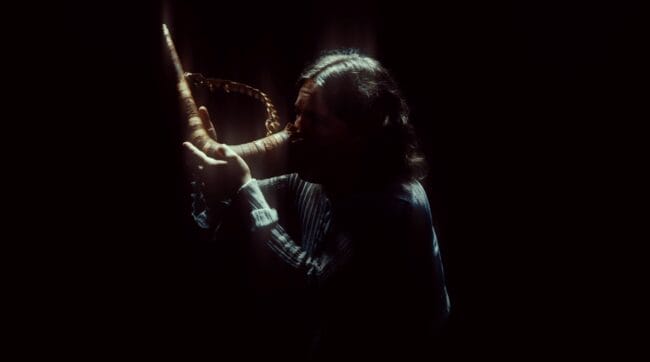
HD: You’ve studied to become a ‘crying guide’ (itkuohjaaja) and held lamenting workshops as part of this project and in preparation for the show. How do you approach lamenting as a group?
SJ: We start with everyone’s personal experiences. As we share them, these processes combine and create a lamentation space together. Even with particular griefs – like the loss of a parent, the loss of a love relationship, or a burned home – they may happen to a specific individual, yet we still have the capacity to live that grief with them.
HD: Do wider, communal griefs come into the equation? It often feels like we’re living through a time that’s marked by a lot of communal grief and confusion.
SJ: There are of course communal griefs – environmental collapse or the current massacres – that are affecting so many people’s lives. In those instances, we perhaps need to speak of a very different scale of grief, and of the whole community needing healing. But still, even in these wider communities, individual grief also exists. I guess I don’t make much of a separation between the two.
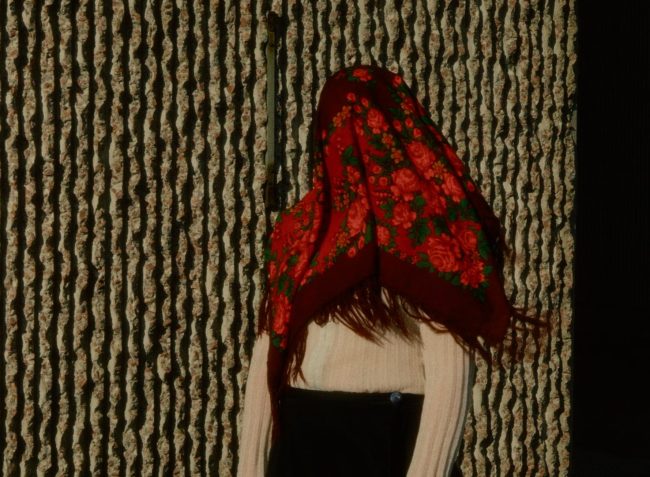
Talk of immaterial heritage like lamenting led naturally to material heritage and craft, which is already central to Jokiniemi’s practice. Sonja is fascinated by the käspaikka, an often intricately decorated, handmade Karelian cloth. Originally towels, the cloths came to serve a dual purpose: eventually adopted for religious use, they were placed around icons or used in rituals such as sending off the spirits of the deceased, while continuing to serve in everyday household tasks. Käspaikkas are often associated with the Orthodox Church, which, as Jokiniemi explains, did not ban lamenting and other Karelian traditions as pagan sins the way Protestants did, but accepted them as part of religious life in eastern parts of the country.
“In the Karelian tradition, you could use the same cloth to both wash your hands and serve holy bread. This mixture of the extremely mundane with the sacred is something that is so fascinating to me”, Sonja mentions.
HD: The mundane and the sacred, what a beautiful pairing. Are there other thresholds or dualities you are exploring?
SJ: It was traditionally believed that one could not cry if they did not have a connection to ‘tuonilmaisiin’ (the other side, afterlife). Arvo operates at the threshold between what is here (the corporeal everyday) and there (beyond our lifespans or understanding).
In the lament texts, there is also a lot of symbolism relating to birds. This was seen as a type of vocabulary that would allow the deceased to come back, visit us, and talk with us on earth. So in many ways, these scriptures became more than narratives: they were an active line of communication with people and things that we cannot see.
HD: Would you say that Arvo is a continuation of the same initial grief that created Armo?
SJ: I believe some of our core griefs are always there, always with us. And we need to keep returning to them because our relationship to them changes with time.
𓅰 𓅬 𓅭 𓅮 𓅯
Sonja’s answer stays with me: some griefs never leave us, but each return shows us how our relationship to them has changed.
Is there a grief you’ve been circling? Are you curious about finding new ways to meet it? Arvo premieres at Stoa November 28th. Details here.