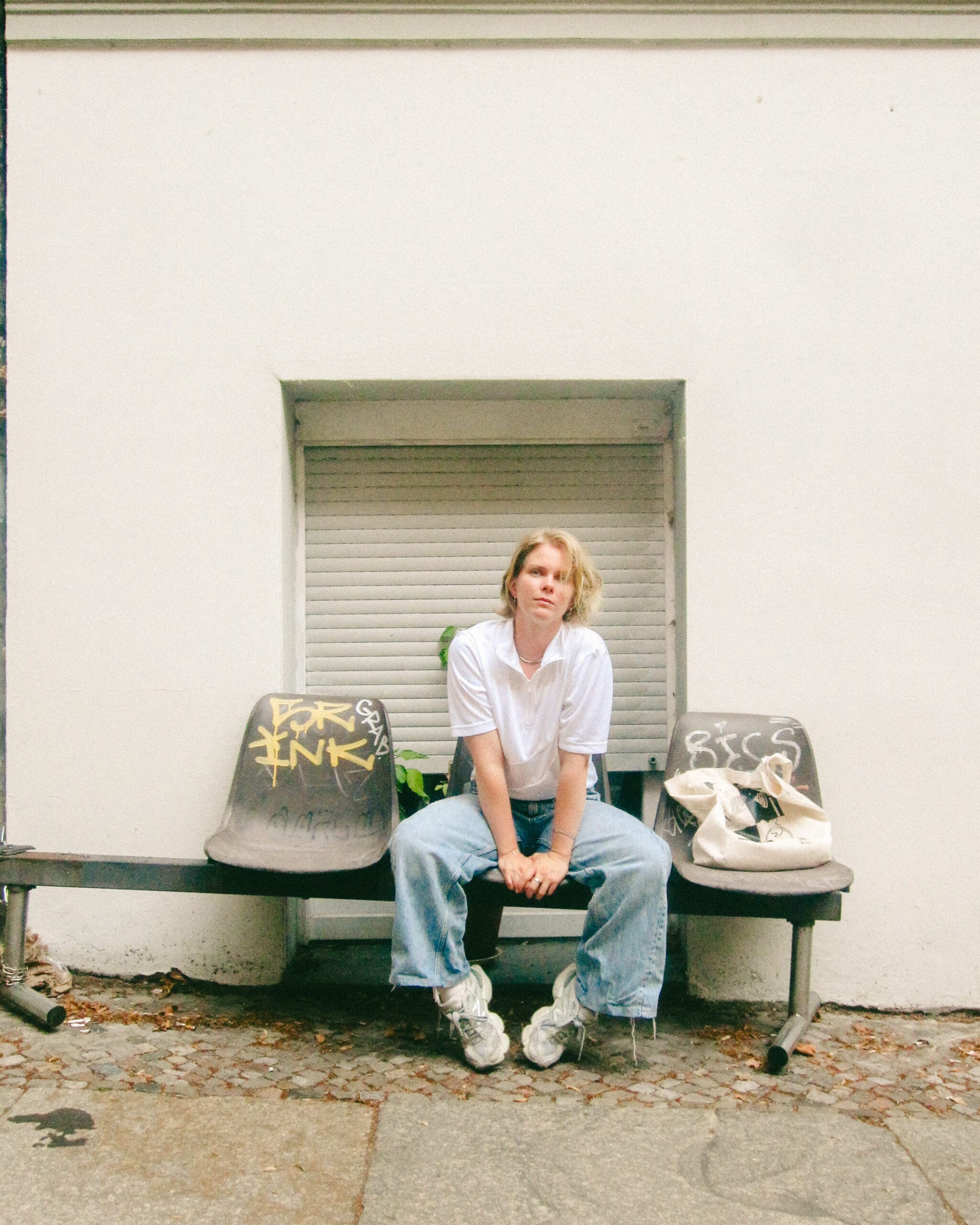
2026 ARTIST INTERVIEW • Performer and dance maker Kauri Sorvari’s practice moves across territories and disciplines. Based between Berlin and Helsinki, their work spans performance art and choreography, working within collectives and institutions alike. As a choreographer, Sorvari is “fascinated by the poetic language through which the body can speak – and by the performer's intelligence and ability to (make) sense”.
Most recently, they contributed choreography to Elolliset, a sold-out production by the WAUHAUS collective at Helsinki City Theatre. The year prior, Kauri worked as a choreographer on Af Klint at Viirus Theatre.
I meet with Kauri in Berlin on a July afternoon that reaches 28 degrees centigrade. Not much, by most central European standards, but enough to render two Finns into sweating wrecks. We find our remedy in the form of two servings of ice cream. They start melting almost as soon as they’re handed over, running down in thin mango-flavoured trails not unlike the beads of sweat already gathering on our skin.
Heat can be pleasureful; so can ice cream. Pair the two and you have a contrasting set of sensations and a delicious setting to talk about one’s approach to eroticism, desire, and intimacy in performance.
It’s an accidental, slightly absurd way into the conversation – but not far at all from the vocabulary and imagery of Forevermore, Sorvari’s performance piece set to premiere at Baltic Circle, in collaboration with Kiasma Theatre on November 27th:
Helmi DeMaxi: Can you tell me a little bit about Forevermore?
Kauri Sorvari: Forevermore deals with something very daily-like and ordinary. I hope that the piece will touch the endlessly repeated and reproduced theme of desire and romance. Really, there is nothing special about it – about “romantic love” or the mystery of it – only that it has the power to transform, destroy or fully shake oneself. It’s the most common reason to create in the first place.
Forevermore is like a collection of little poems or scenes of desire towards the Self, and the Other, towards life and dancing. Wanting nothing less but forever, and more.
HD: You mention being inspired by Byung-Chul Han’s writing. What moved you in his work?
KS: Yes, I peed my pants a little while reading Byung-Chul Han’s thoughts on the agony of eros; how the erotic is never free from secrecy, distance or fantasy; how depression and eros are in a constant play, with eros always conquering depression; why modern love is in crisis and lacks transgression.
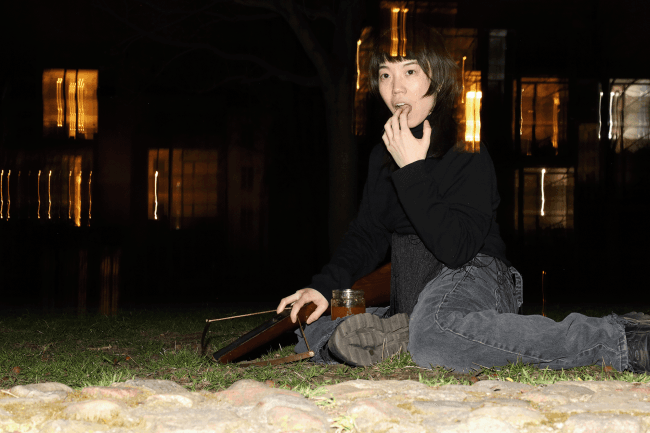
HD: In the rehearsal room and on stage, your performers are working with touch and proximity, translating those earlier ideas of distance and fantasy into something very real that happens in the body. How does intimacy coordination come into the equation?
KS: I’m interested in the area where intimacy coordination and choreography meet, especially in the practice of the performer. I feel that historically the questions around intimacy are in a different place in dance, theatre, and the film industry. I’m following the discourse with curiosity: intimacy coordinators are steadily becoming more common amongst various institutions.
We’ve been lucky to have Sara-Maria Heinonen visit us a few times in the form of consulting IC (intimacy coordinator) and, with their guidance, received hands-on toolkits and ideas on how to construct scenes. I tried to apply the Wheel of Consent by Betty Martin inside our morning practices to help articulate bodily negotiations.
Yes, we touch each other a lot in the rehearsals. Touch in itself can be considered a queer thing; it tends to escape words and definitions.
HD: I’m glad to hear that so much care has been put into it. Speaking of queerness – has living and working in Berlin shaped your approach to this piece?
KS: Berlin is a place where hypersexual imagery is just around you and accessible all the time. It’s commonplace, and in many ways liberating. But maybe the overwhelming amount of it has pushed my attention and instinct as a performance-maker somewhere else, toward how electric small interactions can be. It’s something much less obvious than what the city or the sometimes raging loud performance scene is showing or expecting from you.
Living in a place full of noise has made me quieter, look deeply, and search for relevancy. Berlin has many shadows, it can be a place where intimacy is feared to extremities, a city of lost purposes.
HD: What kind of intimacies are you interested in exploring right now?
KS: Well, intimacy remains very subjective. The working group operates with quite technical questions around performing or showing intimacy with a partner, not displaying their own. I myself keep coming back to quite pedestrian, yet heavy, gestures. A held hand. An almost-kiss. A kiss that stays a kiss and doesn’t develop into anything more. I practise curiosity towards the subtleties: the little in-between moments.
These delicate, deep listening moments have expanded through the process and also taken very expressive shapes.
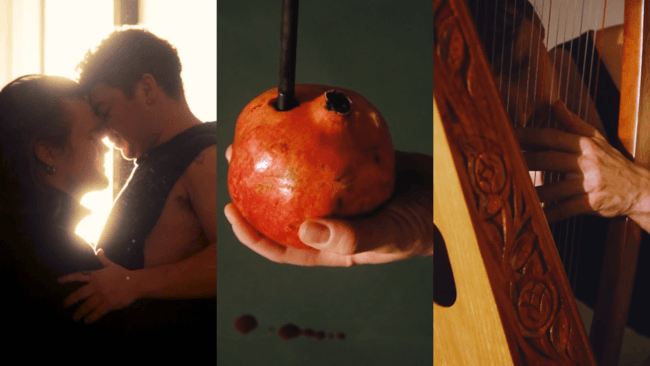
HD: You’re working with an impressive group of artists. What’s the dynamic like in the working group?
KS: I have a huge crush on the whole working group. There’s already a strong sense of trust and having fun, of trying things out and having the courage to be seen. I’m also very aware that I’m being given the space to practise directing, facilitating and framing – and I’m very grateful for it. I am amazed by the amount of versatile intelligences in the room, manifesting in the most peculiar ways. I have always loved rehearsing and asking questions about the nature of the stage; I’ve been given the trust to rehearse the role of a director. It is joyful, simply to learn.
I’ve invited Satu Kankkonen (sound designer), Kristian Palmu (light designer) and performers Ella Koikkalainen, Kid Kokko, Pie Kär, Marlon Moilanen, Yuri Shimaoka and Pietu Wikström to join. Sofia Smeds has been in artistic dialogue (the lens of performers’ dramaturgical work) and Emil Santtu Uuttu wrote text for the piece and will support with dramaturgical aspects closer to the premiere. Guest performers Tuure Kaukua and Aleksi Kolmonen are joining as well. All the performers’ qualities and specialities guide my initiation of the material.
HD: Can you give us a peek into your creative process?
KS: A lot of it happens with a custom playlist running and my laptop open to a view of the Kiasma Theatre stage, visualizing how the different components come together. I also notice how my body moves in a domestic space, a kitchen, say, compared to elsewhere. And sometimes an idea arrives whole. I remember feeling almost giddy watching a couple kiss on a metro platform in Berlin. The choreography felt handed to me in that moment: the gestures were so tacky, so seen a million times. Slowly I started writing scenes guided by that gesture.
Forevermore sits among endless references: modern dance classics, mythologies, stories, films, scenes witnessed in clubs or streets. I think my understanding of all of this is culturally constructed.
In the studio, we practise together every morning. I’ve structured the session around deep listening to the self and waking up the performer-self. We always start with meditation, then continue dancing; being led by the energy of eros, guided by principles I have framed, and practicing verbal and non-verbal negotiation in connection with others. We slowly move into performative states. The performers tune into compositional, corporeal thinking, while I tune into witnessing, organising the material and co-crafting.
The dances that emerge every morning are performances in and of themselves – I remain mesmerised, as these spontaneously realised, beautiful dances are meant to disappear. They have been deeply moving me. They’ve helped me re-remember and cultivate collective imagination as a way of being.
જ⁀➴ ♡
A held hand. An almost-kiss. A sneaky link to the ticket shop that is ready to fill your desires. Forevermore premieres at Kiasma Theatre on November 27th, with additional Baltic Circle shows on the 28th and 29th. Welcome!