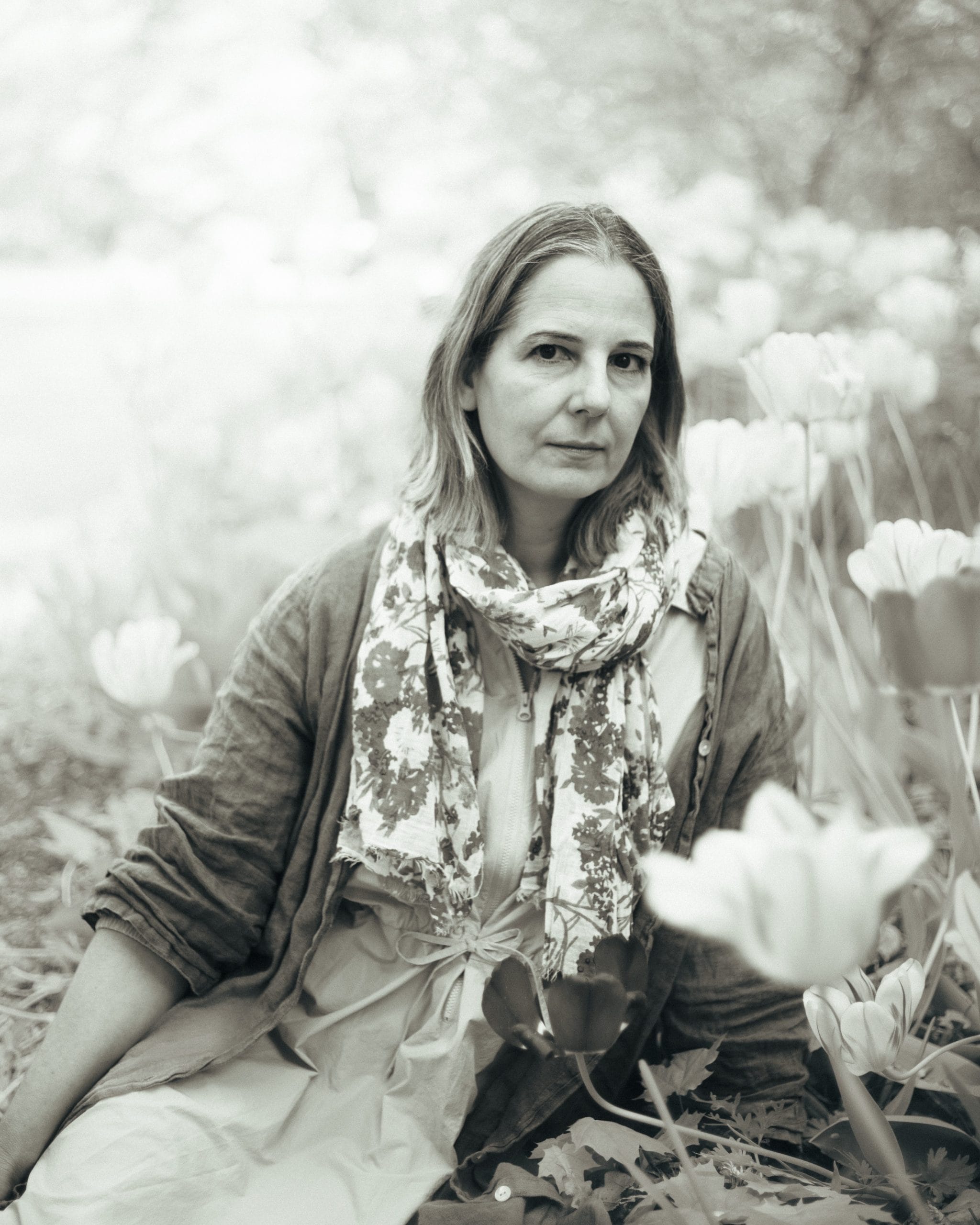
Katalin Trencsényi’s recent essay begins with her standing in a Finnish peatland, wearing muddy boots, enveloped in the aromatic smell of bog rosemary as part of the Baltic Circle 2023 programme. My meeting with Katalin begins on a sunny afternoon in Helsinki, three years later, and in significantly less muddy shoes.
Trencsényi wears many hats: dramaturg, theatre-maker, researcher, writer. “Probably these are the many sides of a person,” she says, “who is passionate about theatre and performance as a lens to understand the human condition and society.” One of her main research interests are second-wave festivals. She describes them as independent art organisations that emerged from the 1980s onwards, often leaner and more locally established than the large post-war institutions that preceded them. This cohort includes Baltic Circle.
Born in Hungary, Katalin found her footing early at the Edinburgh Fringe Festival before arriving in the UK in the late 1990s (a moment, she recalls, when the dramaturgical field was mid-reinvention and the conversations were electric). Though she travels frequently to Helsinki, where she runs the international MA programme in Comparative Dramaturgy and Performance Research at the University of the Arts, she has been based in London for the past 25 years, working as an independent dramaturg.
“Independent, because I want to choose the way I approach my work. I believe that the working process is inseparable from the end result.”
Helmi DeMaxi: That same thinking seems to come up in your recent essay, which leans on Van Kerkhoven’s idea of macro dramaturgy. Could you explain what that means for someone outside the field?
Katalin Trencsényi: It may help to zoom out a bit, and first think of the definition of dramaturgy. The classical interpretation is about how ideas, concepts, maybe ideologies, are materialised through a process and given shape. Usually, dramaturgy has a subservient role. You’re supporting somebody else’s vision. If you look at all the metaphors: midwife, coach, editor… it’s a very feminised responsibility. So I wanted to emancipate dramaturgy from being merely the servant of other people’s visions. I thought: what if we take the tools of dramaturgy (critical thinking, working both through and in dialogue, etc.) and work with those questions outside of the theatre institution?
HD: Where did that lead you?
KT: It’s a bit like the Impressionist painters who decided to leave the studio and paint in the open air – plein air dramaturgy if you will. I believe it helps to leave the safe black box of theatre, either temporarily or permanently, and connect theatre with people, with its environment, with society. This is what Marianne Van Kerkhoven meant by the ‘macro dramaturgical’ responsibility of a theatre institution: staying connected to what is happening outside its walls.
HD: So expanded dramaturgy, instead of taking people inside the theatre, brings theatrical thinking outside to the people?
KT: Exactly. Performance and theatre can happen anywhere. Expanded dramaturgy is about emancipating dramaturgy and giving back its lifeline. Because art is not a product. It’s a commons. It’s a public service. It doesn’t have to be a luxury available only to a few. As the Australian curator and dramaturg David Pledger says, the arts have a vocabulary capable of transformation. The work is to use that vocabulary and that potential within society.
HD: In a moment of so many intersecting crises, what kinds of knowledge do you think the arts are best placed to locate?
KT: There is so much knowledge that gets forgotten because its practitioners age and die, or perhaps because it doesn’t fit the metrics of what counts as expertise. Art can draw attention to those fissures and locate the knowledge gaps, noted Finnish contemporary art curator, Taru Elfving. She is also a dear colleague and friend with whom we often collaborate. For me, successful work brings together different knowledge systems: indigenous knowledge, local knowledge, scientific knowledge, artistic knowledge, embodied knowledge. Working in an interdisciplinary way helps us get out of our own bubbles and look at the world from a different perspective. And maybe find some answers together.
HD: That reminds me of what you’ve written about as well, this idea of the archipelago or “archipelagic thinking” as a reference point for expanded dramaturgical thinking.
KT: Exactly. Archipelagic thinking, a notion coming from Édouard Glissant, also works in describing how smaller organisations might navigate the field. Because they can maneuver and can toward territory that larger organisations cannot reach. They are free. There is so much potential and opportunity for smaller organisations.
HD: The title of your essay posits a question: “What are the traces of a festival?”. I’d love to extend that question to you. In an ideal situation, what sort of a trace does a festival leave?
KT: What Baltic Circle does is itself an exclamation mark. That is a trace. The three-day long Sami Truth and Reconciliation events this past winter, that’s a major trace. A small audience at a swamp, when they are actively restoring it, can be far more impactful than twenty thousand people trampling a field – the soil is ruined even though the audience numbers are larger. But that kind of impact is almost impossible to capture in the metrics that funders currently ask for.
HD: The question of funding is always a challenge, especially when working with cultural projects that require slowness and a willingness not to know the outcome in advance. Given all of that, where do you find yourself most excited to look?
KT: For me, the interesting work, the discoveries usually happen on the fringes, on the threshold. That is why I prefer to work independently, or with independent artists. It’s also why I’m so excited by the work of second-wave independent festivals and engage in their practices of care.