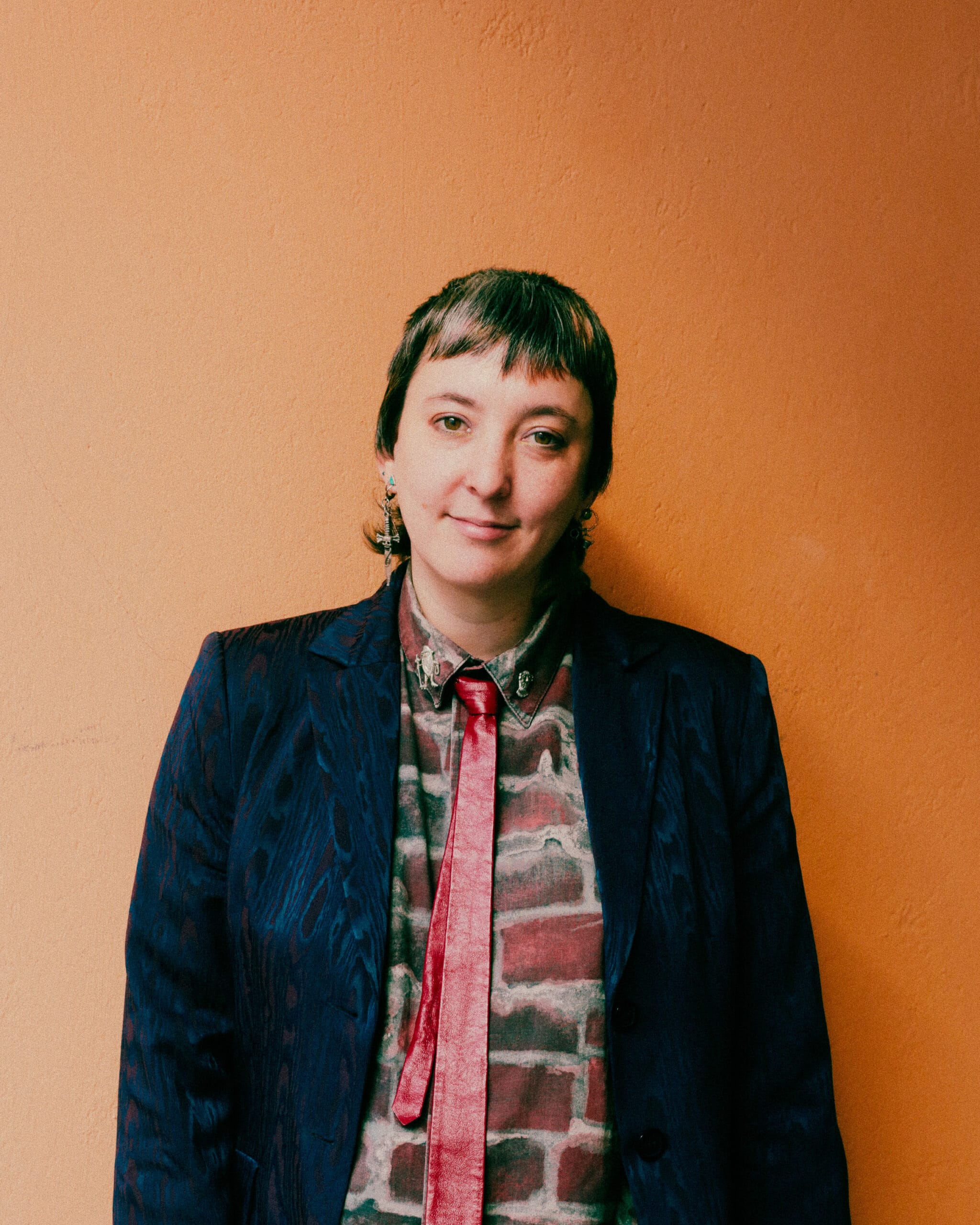
2026 ARTIST INTERVIEW • What does it take to get people talking about death? For curator Katie Lenanton, part of the answer involves cake, coffee, and a room full of strangers. This November, the artist-run kitchen and bakery space Koekeittiö will host 'Marraskahvila (Death Cafe)', Katie’s exhibition project that combines workshops and community gatherings with visual art and music in an attempt to explore how we face dying and bereavement together – and how we might celebrate them, too.
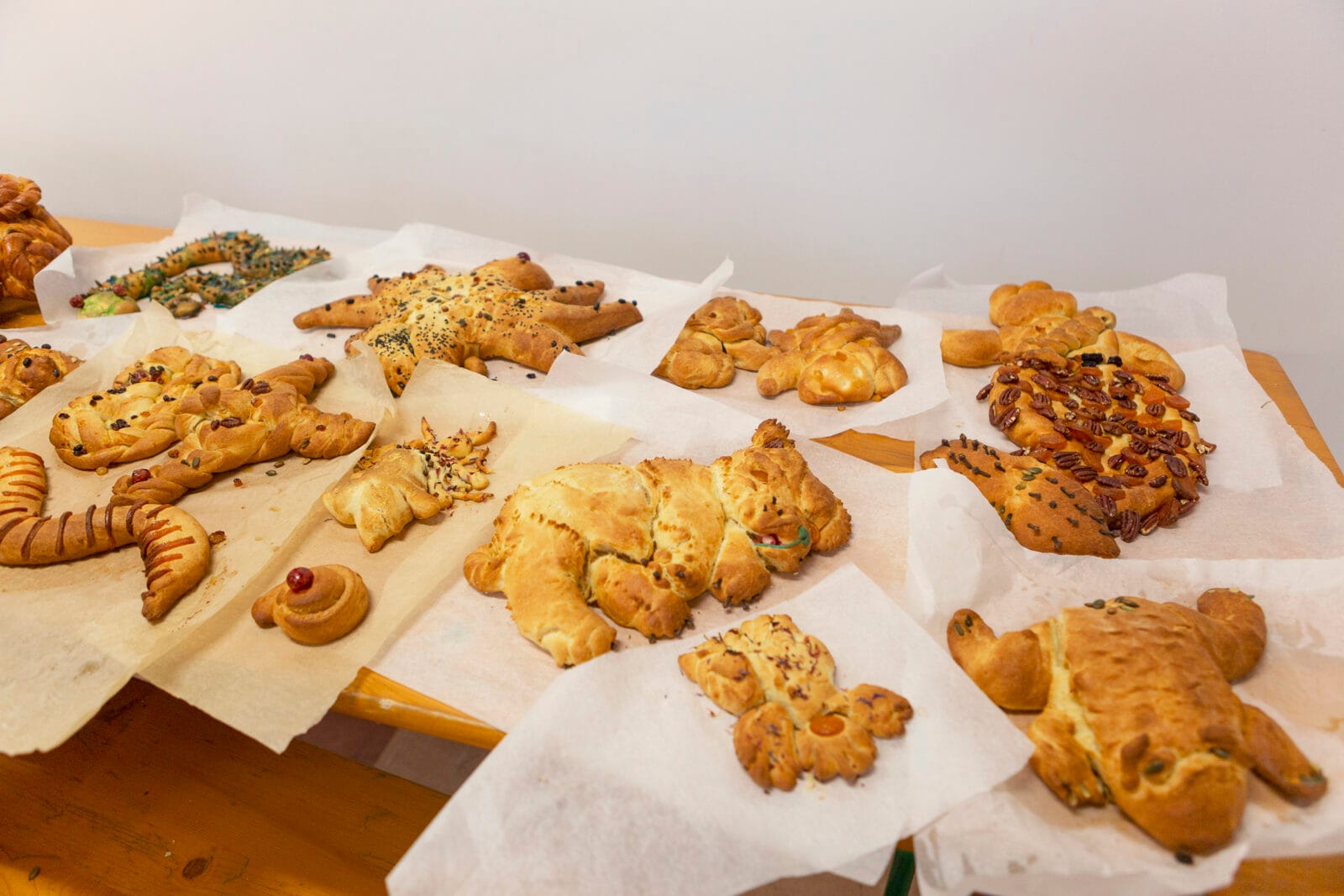
Some programme highlights include a queer post-doom metal gig featuring two feminist death metal bands, a workshop on Karelian lamenting (Mirva Haltia), and a ceremonial cutting of a sandwich cake inspired by Onkalo, Finland’s nuclear waste repository (Meri Linna). This Friday the 13th, the exhibition project warms up with some pre-festival programming, hosting a launch party for the Corpse Cookie publication. More information here.
Katie is an intersectional feminist curator whose work spans exhibitions, social practice, participatory sculpture, publishing, as well as wildcrafting, conceptual cocktail-making, alongside food and scent-based works. In her practice, she is drawn to worldbuilding, queer identities, collective change, difficulty, and togetherness, rarely working alone. Her collaborative approach traces back to the DIY scene in her hometown of Perth, Australia.
We sat down with Katie to talk about what drew her to death as a subject, and how she hopes a famously reserved Finnish audience will take to the conversation.
Helmi DeMaxi: What made you want to create an exhibition project around the topic of death?
Katie Lenanton: I’ve always been fascinated by death. That lifelong interest, combined with witnessing my grandmother’s passing and feeling the energy in the room just shift, made me want to look at it more closely. Aesthetically, death is surrounded by so many clichés in how it’s represented. I’ve always been drawn to the crafts that have come out of mourning: the jewellery, the practices, the objects, the way death runs through art history, and the little reminders—memento mori.
HD: Death is still a difficult subject to talk about, and your exhibition invites that conversation. What draws you toward those harder discussions?
KL: Yes, I love talking about difficult things. I like saying out loud what people might be hesitant to say, directly and honestly. I think it’s helpful, but it can also stir things up inside of us, and it can feel scary.
HD: Do you think talking about death can ever be a topic for small talk?
KL: What a great question. No, I think it goes into your soul, doesn’t it? It’s not light.
HD: Well, Finns are famously not great at small talk. Perhaps that will be useful?
KL: I’m actually quite curious how this will work in a Finnish context, because I hear a lot about cultural silence. I’ve also noticed that when inviting Finnish friends to events in November, they’ll say, “Oh, it’s November,” and that permits them not to leave the house or socialize, and to burrow deeper into themselves.
This seasonal way of life is so present here: the environment, the atmosphere, how everything is always changing. There’s an endurance to winter. So I wanted to organize Death Cafe at the moment when people start to turn inward, in order to think about how we can come together and open ourselves in ways where otherwise there might not be a space or permission to do so. And to hopefully create a sense of community.
HD: Speaking of community, this is an ambitious project with many contributors. How did you bring the group of exhibiting artists together?
KL: It’s a bit of a mix. I’m used to working collectively and with existing communities, and some collaborators, like Sini Silveri and Paola Jalili, I’ve worked with many times. Others are international collaborators whose work I’ve followed from afar, so it was really nice to be able to send them an invitation to join the project.
HD: I was curious: you mentioned in the exhibition text that the death cafe is a DIY social structure that’s existed since the 2000s. Could you tell me a little more about the format?
KL: I’ve never hosted a death cafe, but I’ve been curious about the format for a while. I live far from my parents, who are quite a lot older, and every time I visit we end up talking about power of attorney, wills and that sort of stuff. Sometimes I find it frustrating that we can only talk about meaningful things when we’re physically present, but that presence is really important.
The death cafe concept comes from a UK context. There was a need to talk about death without it being a therapeutic setting or a place explicitly for grief management, although of course those topics come up. We gather around that, open up to each other, think and ask questions together, and co-shape the conversation depending on who’s in the room and what sort of urgencies are there. Maybe someone is preparing for a person who’s dying, or is in the process of bereavement.
HD: Do you see art as a meaningful way into those conversations?
KL: Art is a perfect place to start, because so much can be communicated that isn’t explicit. You can navigate it through different art forms or various cultural practices and rituals. There are of course clichés around the five stages of grief, but grief isn’t that easy to contain. It moves through the body in so many different ways, and living with it is a constant learning process, a way of walking alongside it.
HD: What is your own relationship with death?
KL: Completing death doula training recently has made death more present in my thinking. I’ve also thought about it a lot since I was a kid: what my funeral would be like and how I’d want to be celebrated, what kind of party it would be. With these end-of-life celebrations, and the inevitability that death will come at some point, it’s nice to start thinking about it actively. It’s the one truth about being human.
I think death is also a moment to celebrate life. I’ve had this approach, which hasn’t always served me well, of asking myself, “What if I die tomorrow?”. Then I say the thing, do the thing, or ask the question. I try not to let things fester inside, and to get them out instead. It can be motivating and activating. The looming prospect of death can be life-giving and beautiful, rather than something that horrifies you and leaves you in a fearful and frail headspace.
* * * * *
Lenanton’s invitation is to open up in community at a time of year when many of us retreat further into ourselves. Explore the programme and featured artists of Death Cafe here, and mark November 20th–22nd in your calendar.